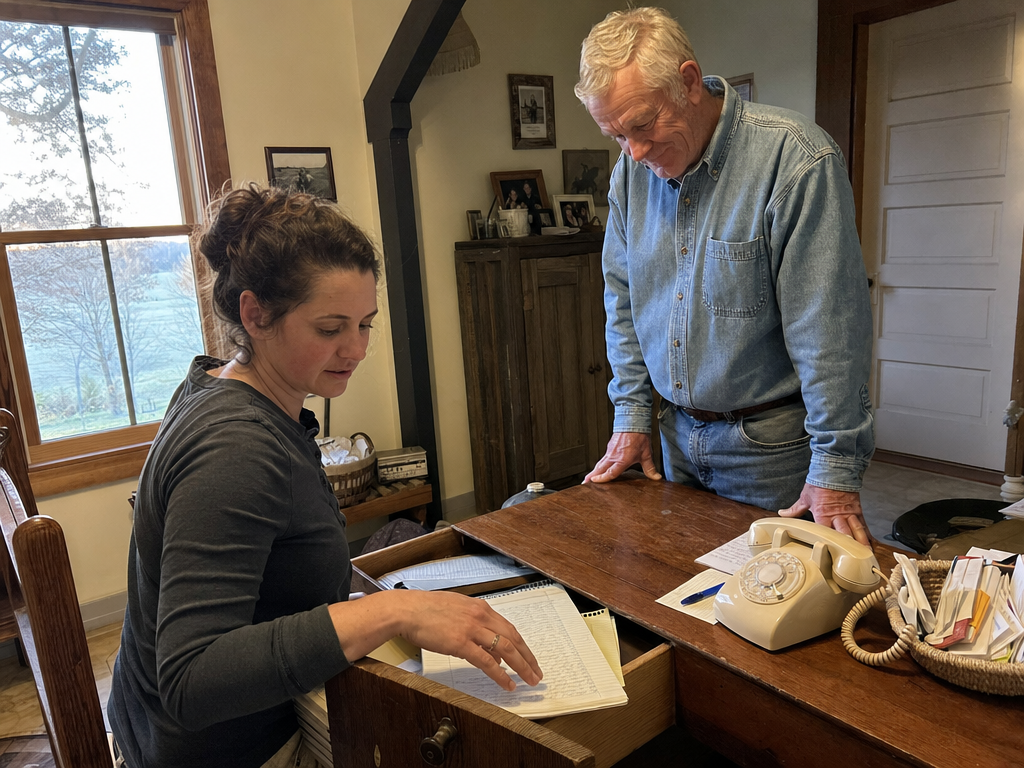
Grandma June's last call reached me during the quietest hour of my overnight customer-service shift. She did not say she was dying. She asked whether I remembered the cedar drawer in her farmhouse office and told me to oil its runners before winter. Then she asked if I still wanted to study accounting. I said tuition had not grown cheaper while we talked. She laughed, told me numbers rewarded patience, and hung up.
She died the following afternoon. At the farmhouse, my uncle Lionel handled grief by labeling furniture with colored tape. He placed blue tape on the cedar desk for himself, saying he had always admired it. I reminded him the will had not been read. He called me overly procedural, which was how our family described any boundary that interrupted a confident man.
The drawer opened smoothly once I rubbed wax along its edges. Inside lay a clothbound ledger, property maps, and a letter from a trust company. The ledger listed forty years of deposits in Grandma's tidy handwriting: twenty dollars from a cleaning job, fifty from a tax refund, dividends reinvested, rent from a narrow field leased for a communications tower. The final balance had seven digits.
Lionel read over my shoulder and accused Grandma's attorney of hiding a fortune. He assumed the trust belonged equally to him and my late mother's estate. The letter said otherwise. Income from the assets would fund named family goals and a community grant program, while principal remained protected by an independent trustee. My accounting tuition appeared on the first page. Before I could react, Lionel pulled out his phone and said he was calling his own lawyer. For the first time since her call, I wished the drawer had stayed shut until I understood what she expected us to do.