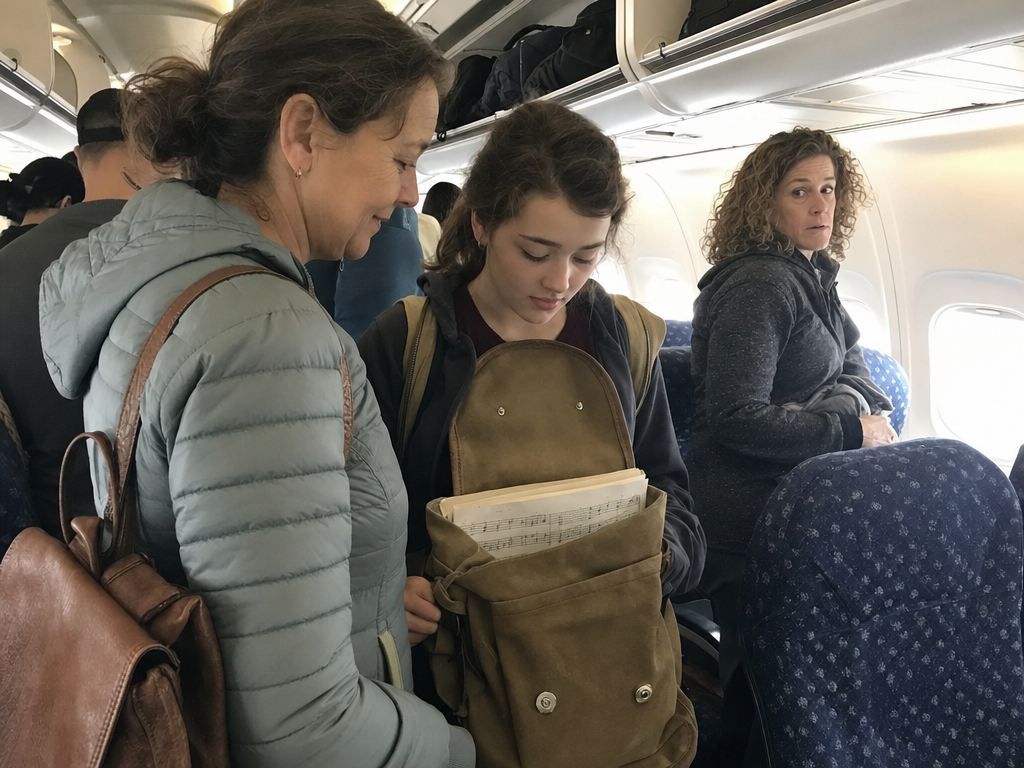
Maya and I boarded with one canvas backpack between us. She carried it against her chest rather than on one shoulder, protecting the bent blue folder inside. The folder held the last composition her father had worked on before he died, crowded with his pencil notes and her new measures in green ink. We were taking it to a youth ensemble in Chicago, where Maya had promised to play a draft for the first time.
Our boarding passes placed her at the window and me beside her. When we reached the row, a woman in a cream sweater was already sitting in Maya’s seat with her shoes off and a blanket arranged over her knees. She glanced at our passes and said she had traded with someone farther back. The trade, apparently, involved my daughter taking a middle seat nine rows away.
I told her we had not agreed. She sighed and explained that looking out the window kept her calm during takeoff. I understood anxiety; Maya had barely flown since her father’s illness, and I had chosen adjacent seats so neither of us would have to be brave alone. Still, the woman spoke as if her need became our assignment. Passengers gathered behind us while I asked her to return to her ticketed place.
Maya whispered that she could move. Her old habit was to solve tension by disappearing from it. I nearly accepted because the aisle felt like a public stage and the flight attendant was waving people forward. Then I saw Maya’s fingers tighten around the backpack. I said we would wait for the crew to sort it out. The woman rolled her eyes and reached toward the bag, suggesting we put it overhead so everyone could sit down. Maya stepped back so sharply that the folder struck the armrest.