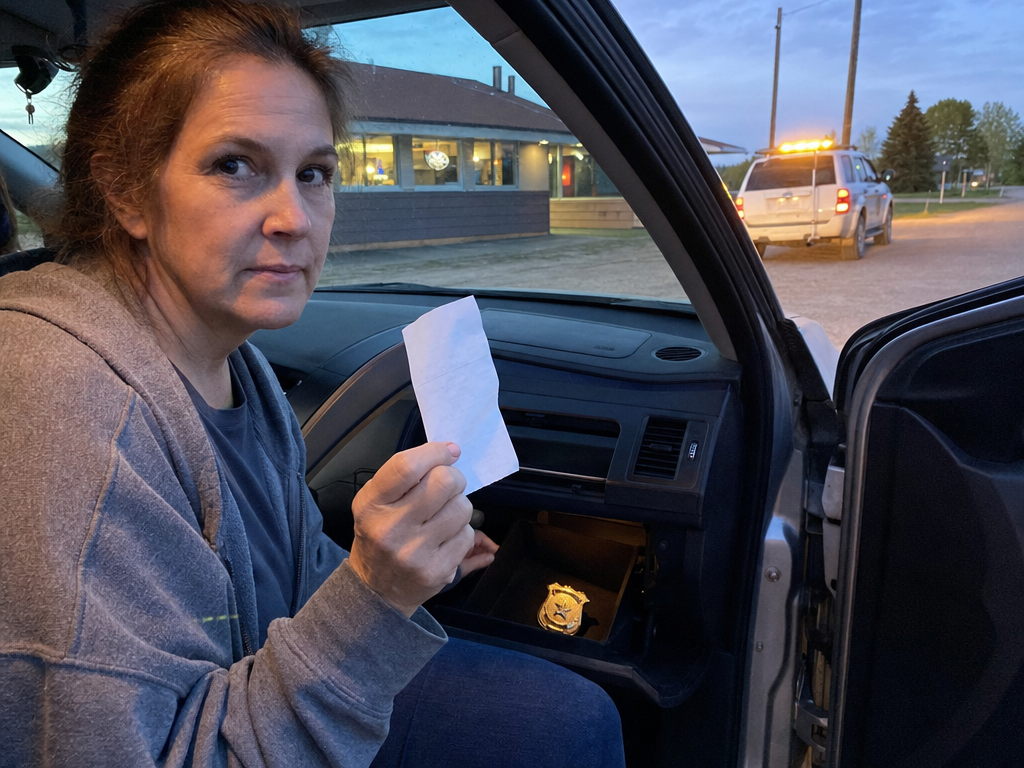
I was carrying my father's gold highway-service shield to the county archive when Deputy Cole stopped me at mile nine. The shield was not a police badge. It had been presented to Dad after thirty years inspecting bridges, and it lay inside a clear envelope in my glove box. Cole approached with one hand near his belt and told me my left taillight was out. When I reached for the registration, the envelope slid onto the passenger seat.
His manner changed before I said who Dad had been. He lowered his flashlight, called me ma'am, and asked whether the shield belonged to family. Then he suggested a warning would be enough. Five minutes earlier, he had ordered me to keep both hands visible when I tried to turn on the cabin light. I felt relief, followed immediately by shame that a piece of metal had purchased it. I asked him to document the stop exactly as he normally would.
Cole stared at me, then wrote an equipment warning without an incident number. He said the computer was down and I could replace the bulb at the diner ahead. I drove there slowly, watching his headlights remain in my mirror until the road curved. Inside, the night server sold me a bulb from a dusty display and refused my offer to pay for installation. A cook came outside with a screwdriver and fixed it beneath the parking-lot lamp.
When I returned to my booth, the receipt lay facedown under my coffee. It listed seven dates instead of a server's name. Beside each date was the same amount: four dollars and sixty cents. The bottom carried only MILE 9 and a question mark. I looked toward the counter. The server was filling sugar jars, the cook had vanished, and Deputy Cole's patrol car had just turned into the lot.