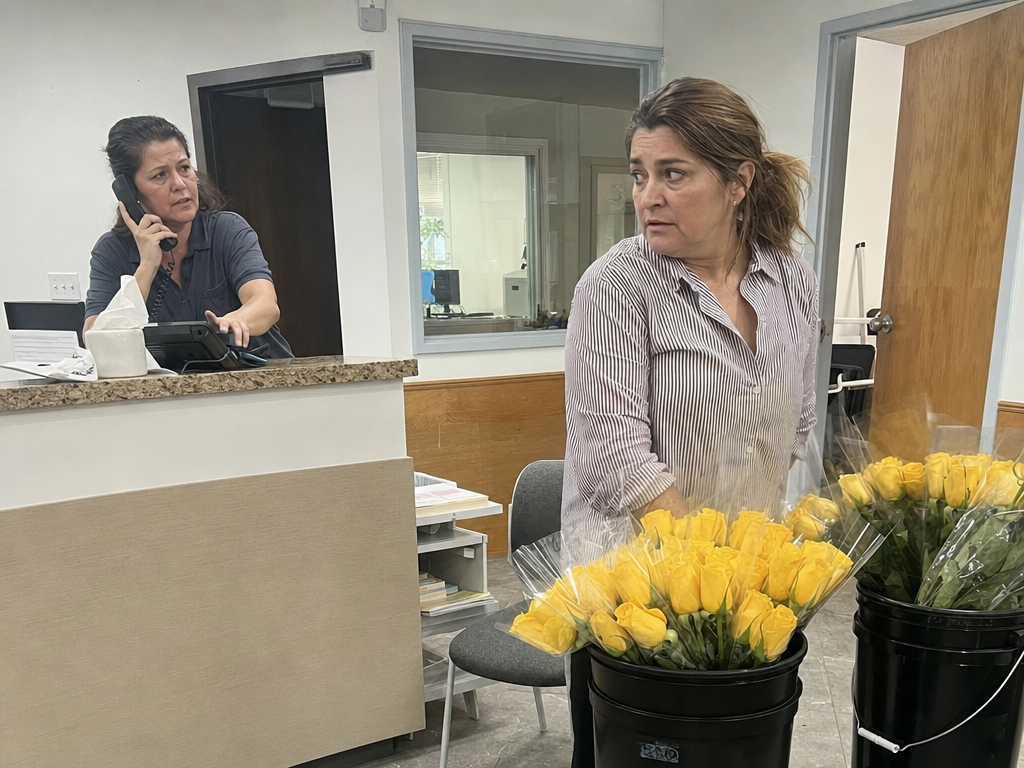
The roses arrived in five white buckets because no vase in our community arts office could hold them. One hundred yellow blooms filled the reception area with a sweet, heavy smell. My coworker Priya laughed and asked what admirer I had forgotten to mention. I searched every bucket for a card and found none.
Seven years earlier, my cousin Simon had placed a single yellow rose on my desk whenever he wanted me to approve an event-company invoice without questions. We owned the company together. At first, the flowers seemed like his odd attempt at charm. Later, after I discovered duplicate vendor payments and forged signatures, a yellow rose appeared on my car windshield the morning before I met with an investigator.
That old case never reached charges. Simon claimed bookkeeping errors, our records were incomplete, and the outside bookkeeper confirmed his version. I left the company with debt and a settlement that prohibited either of us from admitting wrongdoing. I changed careers, moved across town, and learned to pass flower stands without staring at yellow petals.
Now one hundred of them stood ten feet from my desk. Priya saw my face and stopped smiling. I told her not to touch the buckets. Then I called the police. The dispatcher asked whether the flowers contained a threat. I said the threat was the history attached to them, and I could explain.
Officer Malik arrived with another officer and treated my answer as information rather than hysteria. He photographed the delivery labels, contacted the florist, and asked where I could wait safely. The order had been paid in cash, but the customer requested exactly one hundred stems and gave my current work address. Only a few people connected to my old company knew why yellow roses would frighten me. Malik asked whether I still had my case number. I recited it from memory. He looked toward the buckets and said the old file was probably still at Central Station. For the first time, someone was going to read it beside me.