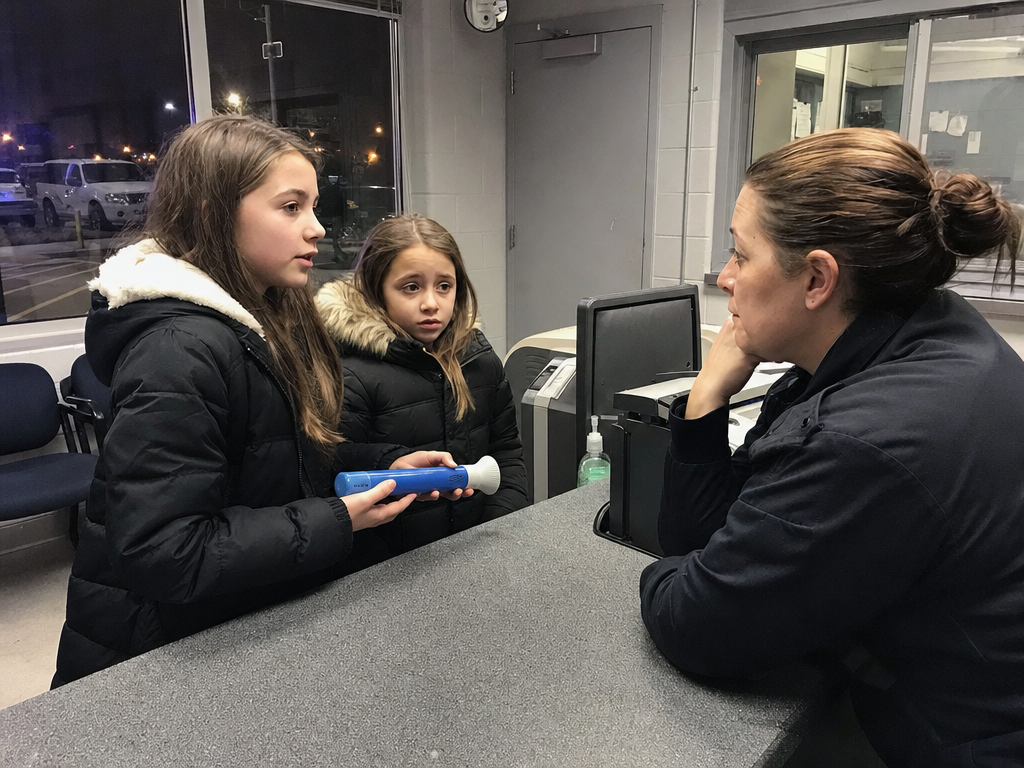
The station boiler failed at midnight, and by two the metal front desk felt cold through my sleeves. I was the only sergeant in the public room while officers handled a highway collision across town. A girl called the nonemergency line to say her mother had not come home from cleaning offices. She could not tell me the building number, only that it had a stone lion and green basement doors. I told her to contact another adult and call again with an address. I recorded the call as incomplete and returned to the collision radio.
Forty minutes later, the same girl pushed through the station door with a smaller child beside her. Their coats were zipped crookedly, and wet snow clung to their shoes. The older one, who said her name was Leni, held a blue plastic case containing a capped emergency syringe. Her sister Ava carried a grocery bag with their mother's photograph and cleaning badge. Their faces were red from cold, but neither girl looked uncertain about coming inside that night. Leni placed everything on the desk and said, very carefully, that she had found an adult just as I instructed. The adult was me.
Shame arrived before urgency, but training kept my hands moving. I brought them behind the counter, called for a medic to examine the sealed case, and took their information again. Their mother, Carmen Ruiz, managed diabetes and carried the blue rescue kit on every overnight shift. It was still at home. She should have returned at one. Her phone went straight to voicemail. The cleaning badge named a contractor but no work site. Above my desk, the station clock clicked past three. Beneath it sat a file tray of building complaints waiting for Monday review. A green corner protruded from the bottom.