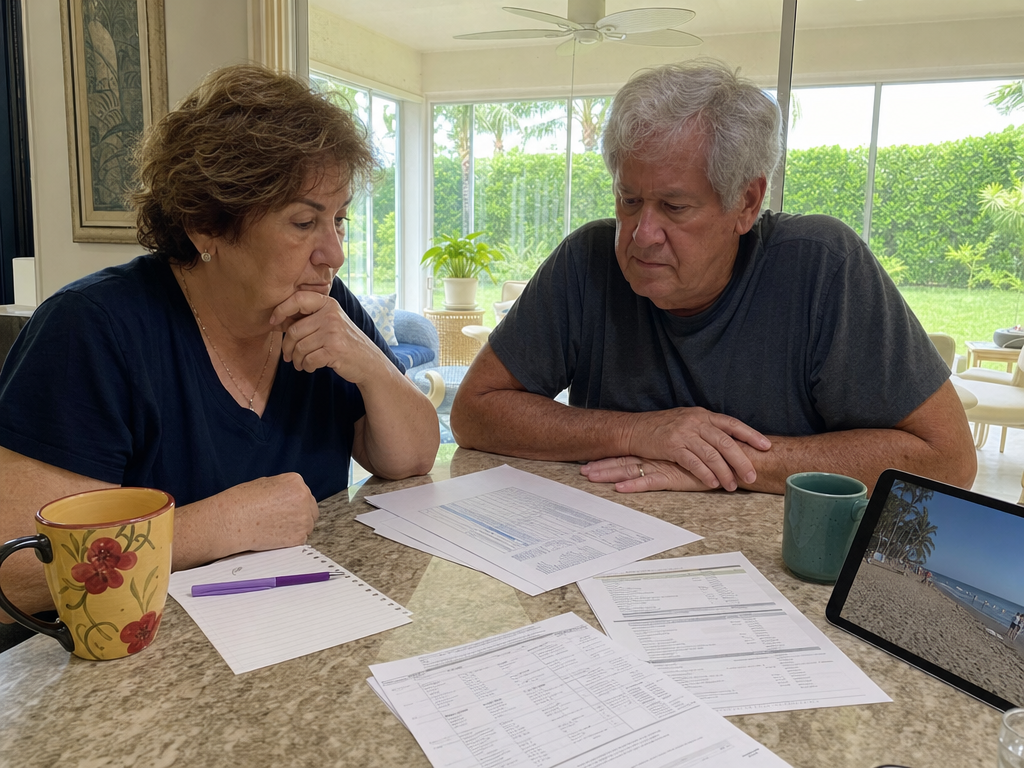
I discovered the missing money while trying to hire someone to sit with June at night. Eight months after her stroke, she could walk short distances with a frame and communicate through a letter board, but she still needed help turning in bed. I had been sleeping in two-hour pieces. We saved fourteen thousand dollars in a separate account for respite care, enough to cover six weeks while I recovered my strength. I had promised June that the money would buy us time, not luxury. Seeing the nearly empty account made my fatigue feel dangerous in a way I could no longer dismiss quietly. When the agency tried the first payment, the account contained sixty-three dollars.
The bank statement showed three transfers to our daughter Mara, followed by charges at an airline, a Florida resort, and a rental-car company. Mara had limited access to pay household bills during June's rehabilitation. I had never removed it because distrust felt like one more burden I could postpone. On my tablet, a family photograph from that morning showed Mara, her husband, and our grandchildren on a bright beach. June's sunhat sat on the chair beside them. They had taken it from our hall closet.
I turned the screen toward June. Her left hand trembled as she pointed to letters: C-A-L-L. I asked whether she meant Mara. She shook her head and spelled B-A-N-K. I wanted to wait until our daughter came home, to protect the grandchildren from a police report and myself from admitting what had happened. June struck the table with her palm, then pointed to the care calendar. Two overnight shifts had already been canceled. The theft was not an abstract betrayal. It was the sleep I had promised her and the safety neither of us could provide alone.