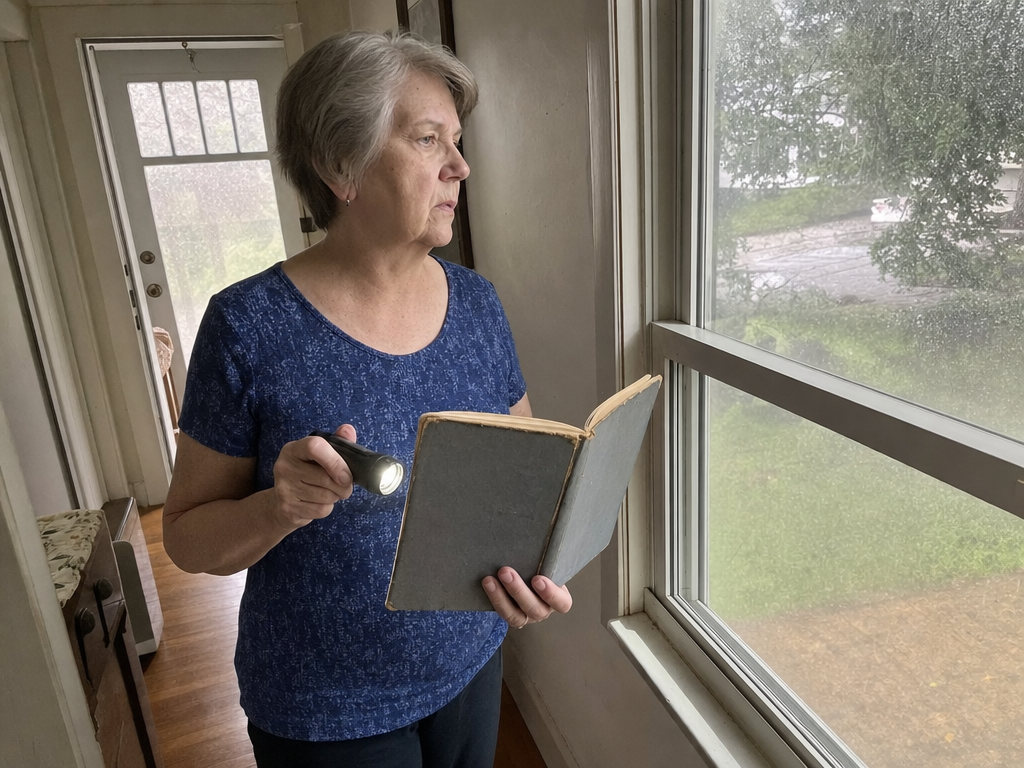
The hurricane was still a category two when my son, Aaron, said there was room for everyone in the car. By noon, it had strengthened, and the room disappeared. His wife, Celia, loaded two suitcases, their dog, bottled water, and a plastic tub of work equipment. Aaron said a county accessibility van would collect me because I was recovering from ankle surgery and could not climb into their crowded vehicle safely. He taped the confirmation number beside the telephone.
I asked to see the reservation. Celia said the dispatcher had called her directly and would arrive within forty minutes. Aaron avoided my eyes while carrying the dog crate outside. I owned the house, but they had lived with me since their apartment flooded the previous year. Our arrangement had gradually made me the person who stayed home with deliveries and made room for their plans. Still, I believed my son would not drive away without confirming my evacuation.
Their taillights vanished at one fifteen. At two, I called the county number. The woman who answered found no reservation under my name or address. The confirmation on the paper belonged to a general shelter information request, not transportation. Regular pickups had ended an hour earlier as wind crossed the bridge. She told me to move to an interior room and call emergency services only for immediate danger.
I phoned Aaron until calls stopped connecting. Celia sent one message: Van must be delayed. Stay calm. I typed that no van was coming, but the message remained unsent. Outside, palm fronds scraped the roof. I opened the hall closet for blankets and found my old choir binder on the top shelf. In its margins, I had written breathing cues for nervous singers. Beneath one hymn was a phone number labeled storm captain, followed by the name of a neighbor who had died three years earlier.