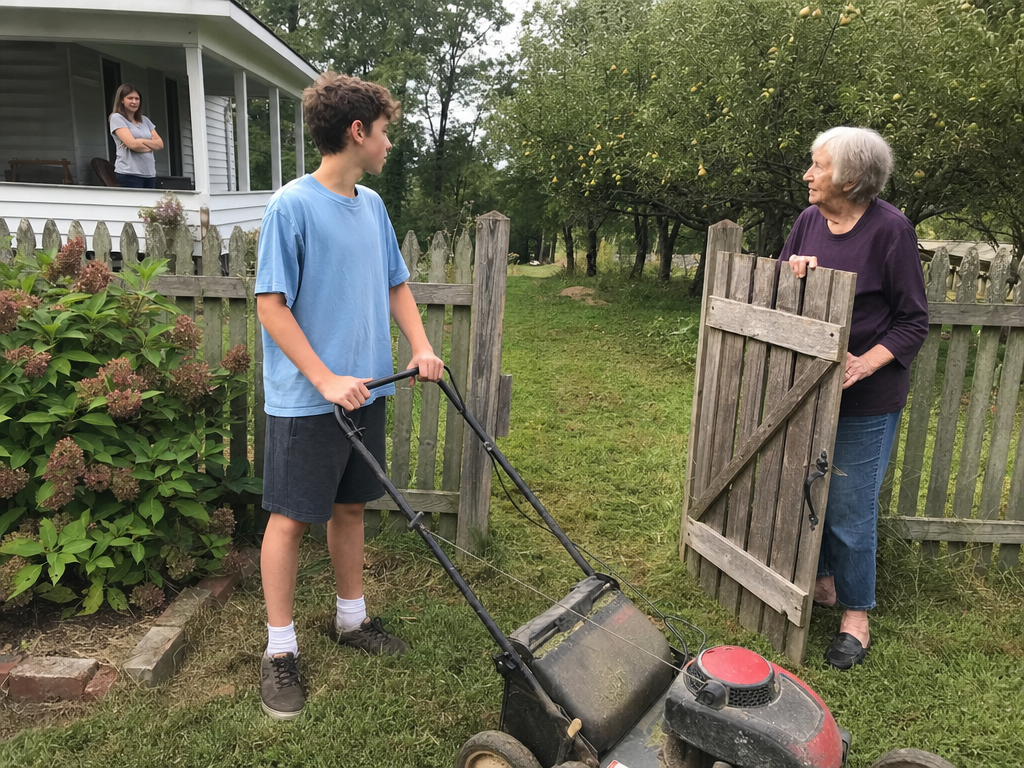
The first time Owen mowed Mrs. Vale's yard, he was twelve and angry with me. I had canceled his gaming subscription after he used my card without asking, so he marched outside. Mrs. Vale's grass had grown around the city notice. Owen hauled our push mower across Juniper Lane, knocked on her door, and offered to cut everything for twenty dollars. She offered him a glass of water and said she had four.
He did it anyway. I watched from our porch as he wrestled the mower through weeds that reached his knees. Mrs. Vale sat beneath a striped umbrella. Behind her house stood six rows of old pear trees, enclosed by a gate that leaned on one hinge. Owen cut a narrow path from the porch to that gate, although she had not asked. When he came home, his sneakers were green and his anger had become the quieter misery of exhausted muscles.
The following Saturday, he crossed the street again. Mrs. Vale paid him in toast spread with pear butter and showed him how to sharpen the mower blade. By autumn, the city notice was gone. Owen kept the front lawn short, but he always cut the path to the orchard first. He said Mrs. Vale liked to sit at the gate and listen to fruit dropping in the grass. She told me my son was not providing a service; he was keeping an appointment.
The appointment lasted four years. Owen grew tall enough to push the mower one-handed, then wise enough not to. Mrs. Vale grew smaller, moving from the gate to her porch and finally to the chair by her front window. On the last Thursday of August, Owen finished the path and found her window closed. Her niece called that evening to say she had died at the care center before dawn. At the funeral, while Owen stood beside the pearwood casket, a man with a silver tie touched his elbow and asked whether the orchard gate was still sticking.