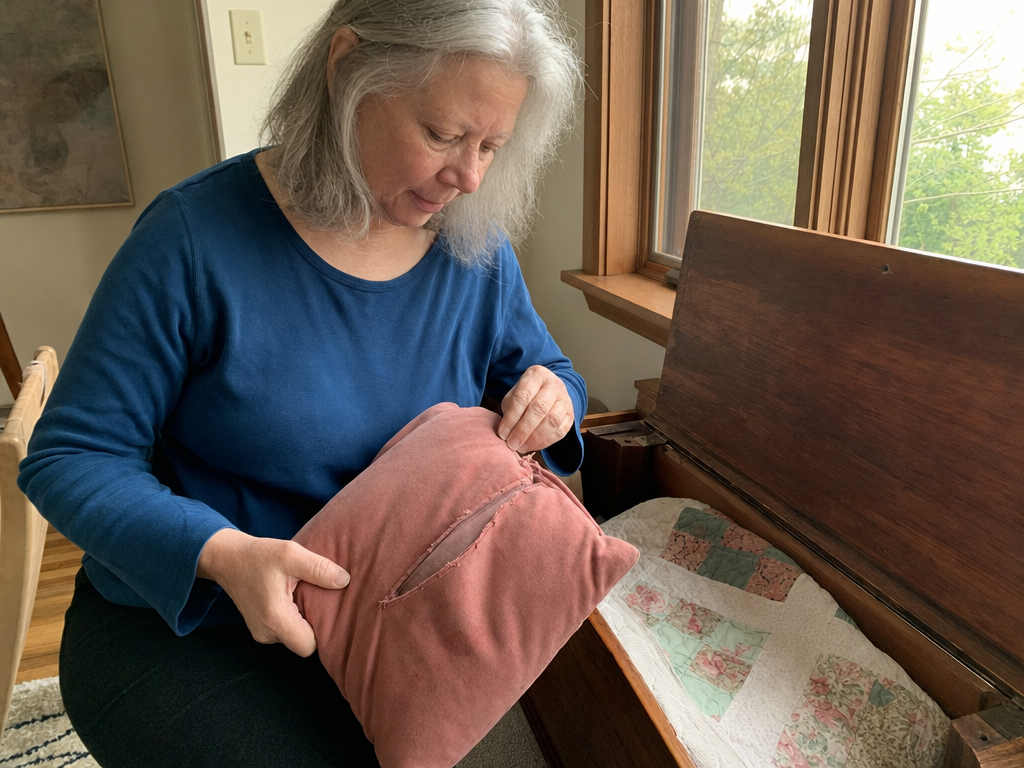
After Peter died, the nurse named Maren walked me to the hospital elevator with a faded rose-colored cushion pressed against her uniform. I recognized it from his final room but not from our house. Peter had kept it beneath his elbow while we listened to rain strike the window. Maren said he had asked her to make sure I took it home. I accepted because grief had turned every object near him into something I was afraid to refuse.
For nine days, the cushion remained inside a grocery bag by my front door. I signed forms, returned rented equipment, and answered casseroles with thank-you notes. Our daughter, Tess, arrived from Denver and began sorting medicines for disposal. She asked about the cushion. I said it belonged to the hospital. That night, I found the grocery bag moved beside the cedar window seat Peter had built when Tess was small. She denied touching it, and I believed her because dust still covered the bag handles.
The window seat had once held wooden trains, winter boots, and every drawing Tess refused to discard. Peter installed the lock during a rash of neighborhood break-ins, then misplaced the key before anything valuable went inside. In his final months, I sometimes caught him resting there with a sewing tin. He always closed the lid when I entered, claiming he was repairing loose buttons.
When I lifted the cushion, one seam opened across my palm. A strip of cream fabric showed beneath the stuffing, secured with bright blue thread. I pulled gently and uncovered three hand-sewn words: window, hinge, listen. Peter's stitches were unmistakable. He repaired buttons with knots large enough to catch a fingernail. I carried the cushion to the window seat and tried its lid. It had been locked since spring, when Peter said the wood had swollen. The brass hinge was cool, but something inside tapped once when I knelt.