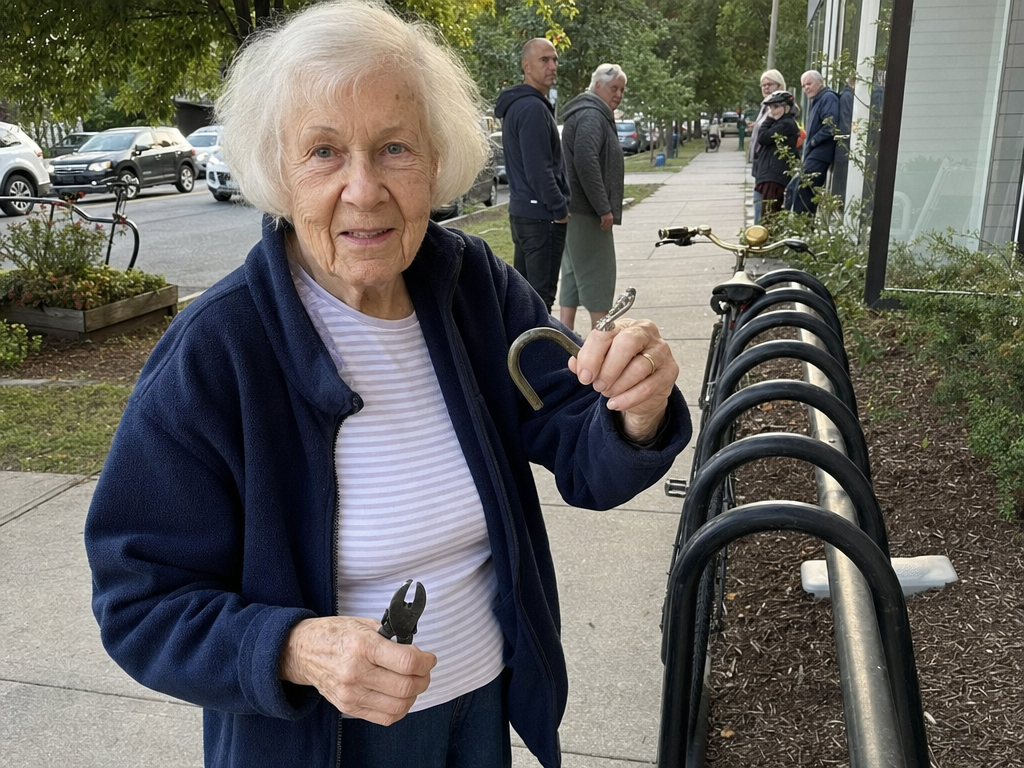
At eighty-five, I rode my blue bicycle three mornings a week, mostly because everyone preferred that I did not. My son called it unnecessary risk. My neighbor Celeste offered rides in a voice usually reserved for condolences. The bicycle was older than some of their marriages, with a milk crate over the rear wheel and a brass bell that rang twice whenever I hit the cracked pavement on Juniper Lane. I knew my balance, wore a helmet, and chose side streets.
I locked the bicycle outside Bell's Pharmacy while collecting eye drops. Seven minutes later, the rack held only my cut cable. The pharmacist wanted me to sit down. I wanted him to check the camera before the recording erased itself. The image showed a hooded figure clipping the cable, mounting my bicycle, and wobbling into traffic. I filed a report, photographed the rack, and walked home with the cable looped over my arm like a dead gray snake.
The bicycle had belonged to my sister Joan, who gave it to me after arthritis ended her riding years. I replaced the saddle and brakes, but kept her bell and the scratches beneath the basket. Losing it was not the same as losing Joan. Still, I disliked how quickly people spoke as if age had made both the bicycle and my independence disposable at once.
By noon, Celeste had told the block. Children searched alleys while their parents posted pictures. My son, Marcus, arrived with a list of safer transportation options and began measuring my porch for a chair. I thanked him, tore up the list, and asked for a better lock. He said the theft proved his point. I said it proved cable could be cut. We were still arguing when a bicycle bell rang once beyond the hedge, unmistakably mine, then went silent near the vacant house at the corner.