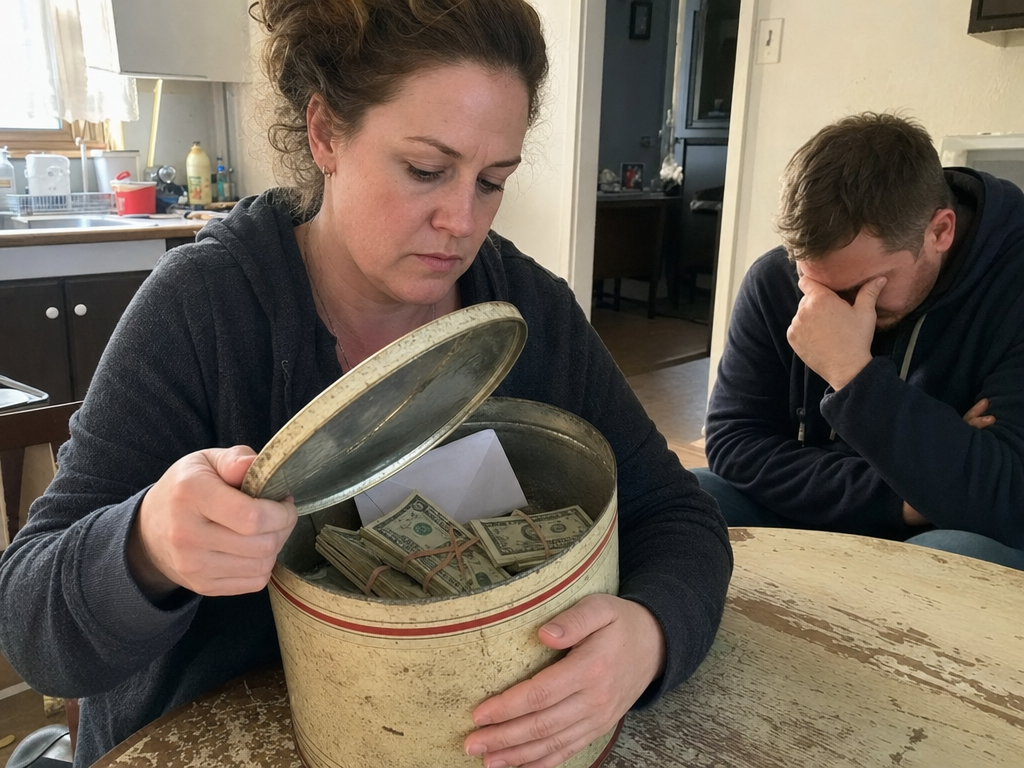
Three days after my mother's funeral, my brother Owen and I began clearing her kitchen. We worked badly together. He wanted to decide quickly what to donate, while I kept opening drawers and being ambushed by ordinary things: rubber bands around takeout menus, the chipped spoon she used for gravy, my school photograph tucked behind the tea bags.
The flour tin felt too heavy. I expected an unopened bag inside, but beneath a layer of waxed paper lay nine bundles of cash secured with faded garden ties. Owen counted twice at the table. The total was $18,940. My mother had lived on a pension, clipped coupons, and complained when tomatoes cost more than a dollar. Neither of us could explain how she had accumulated so much money.
A folded note rested under the last bundle. It contained only one complete sentence in her slanted handwriting: “Please use this for the last seat in the Lantern Room.” Below it, she had begun another line—“After the final call, ask”—and stopped. There was no name, no date, and no legal instruction. Owen assumed the note was an old person's confusion. He said we should deposit the cash with the estate and split whatever remained.
I knew the Lantern Room. It occupied the second floor of the abandoned ferry terminal where our mother had served soup every Thursday for nearly thirty years. Paper lanterns hung from its pressed-tin ceiling, and mismatched chairs faced a small stage. I had not visited since moving away twelve years earlier. Owen said the building was being sold and the community group had already missed its chance.
Inside the tin lid, I found a telephone number written in pencil. I called before I could lose my nerve. A man named Tomas answered and went silent when I gave my mother's name. Then he said the final call for cooperative shares was at noon the next day. If we wanted to understand the money, we needed to arrive before the doors closed.