My mother waited until dessert to say Noah should not come back. She placed the serving spoon beside the peach cobbler and spoke as calmly as if she were changing the Sunday menu. Noah, who was eight, sat at the far end of the table arranging four blueberries into a square. My sixteen-year-old daughter, Tess, stopped chewing. I asked Mother what she meant. She said the house had become too unsettled when Noah visited and that future lunches would be easier if I brought only Tess.
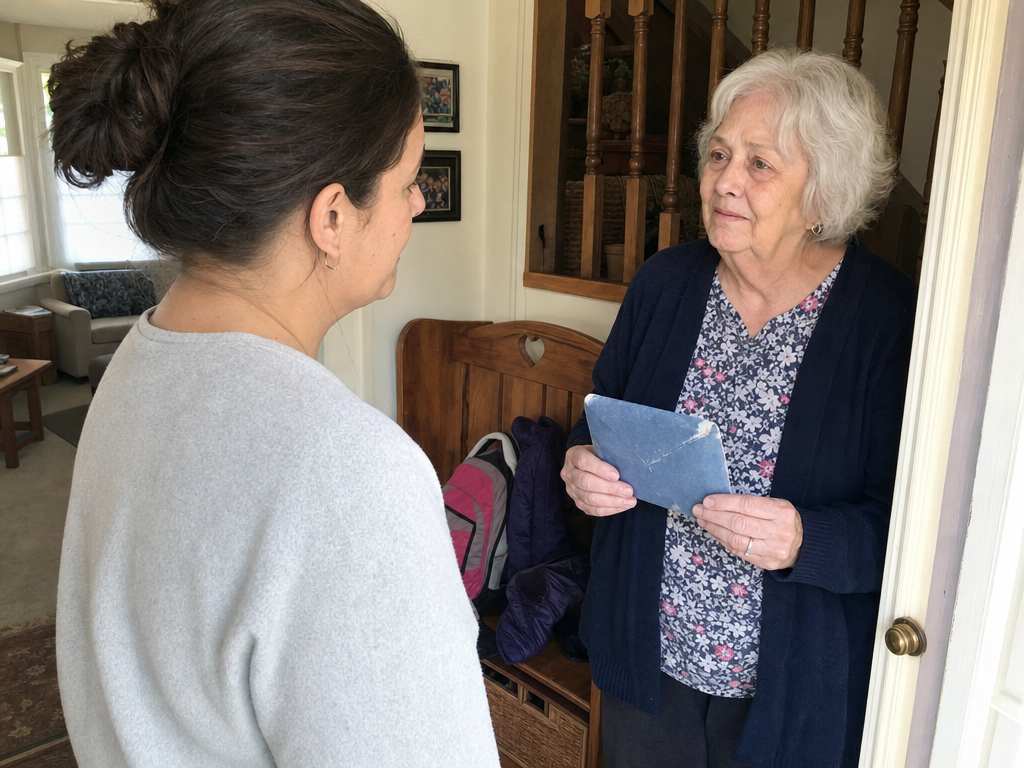
Nothing dramatic had happened that afternoon. Noah had asked why Granddad's workshop remained locked two years after his death. He had tapped the glass of the cabinet where Mother kept blue envelopes tied with ribbon. He had covered his ears when the mixer squealed and gone to the porch until it stopped. Mother described those things as disruptions. I knew Noah could be blunt and restless when a room grew loud, but I also knew he had carried his plate to the sink and asked before touching anything. Still, I heard myself promise we would discuss it later.
Tess pushed back her chair. She said there would be no later because Mother had been telling her for months to keep Noah quiet, redirect his questions, and make visits pleasant. Mother called that sisterly responsibility. Tess called it making her responsible for an adult's comfort. Noah looked up from the blueberries and asked whether he had broken something. I should have answered immediately. Instead I saw my childhood training laid out before me: smooth the tablecloth, lower the voice, earn the invitation. Tess reached for her brother's hand and said he had broken nothing. Then she asked me whether we were leaving together or whether she needed to call Dad. I finally stood up.